Case Studies
CASE STUDY 1 – Lap Pool
The use of high-performance polymeric materials
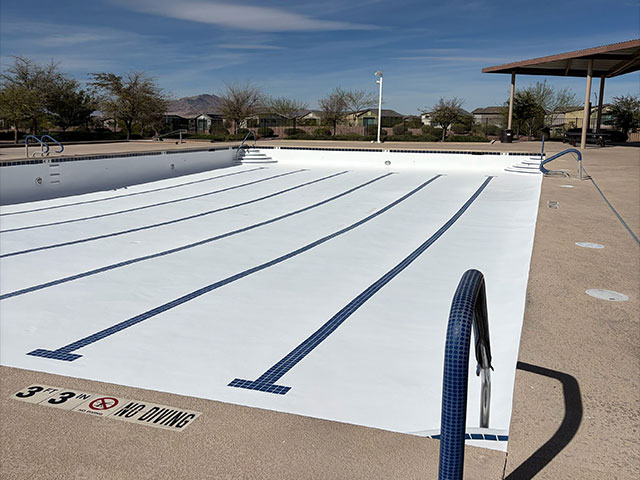
Many unsubstantiated claims were made about the performance of these finishes. Overstated warranties, and product performance were exaggerated to sell the products.Nevertheless, the pool industry adopted the use of these finishes, because they were unaware of other options. After years of use, we are now in a position to ascertain how these cement products actually performed. For pool resurfacing The operator of this thirty year old lap pool had been through many periods where the pool had to be shut down, and the pool resurfaced with plaster. As this has become increasingly costly, and to avoid repeated resurfacing, the pool operator decided do investigate some alternative products for pool finishing. He consulted a coatings specialist to investigate candidate coatings for his current resurfacing project. He needed somebody knowledgeable to guide him through the process of coating selection, as many products are over sold, and do not perform or attain the service life anticipated. The following materials where presented to the owner for his review.
This thirty year old pool was built using a traditional construction method, i.e., gunite. In some areas, poured- in- place concrete pools are more common, and more conducive to using polymeric products. The vast majority of gunite pools finish the gunite, using cement- based materials. The early forms of pool plaster consisted of white cement incorporating a marble aggregate, and became commonly called marble plaster. Over time, pool operators noticed that the plaster did not perform very well in terms of aesthetics and durability. The pool water and chemical environment is hard on plaster, which leads to its degradation.This deterioration is especially noticeable in spas, because hot water is even more aggressive, leading to a faster decline of the finish. As this was the state of the pool plaster business, manufactures went searching for more durable products, compared to basic marble plaster. In the late 90’s many new cement-based products were introduced to alleviate the problems associated with cement finishes. Products like Pebble Tec and Diamond Brite became the go-to materials, almost eliminating basic marble plaster.
Premium epoxy pool paints, polyurea, PVC vinyl membranes and Aqua Armor polymer coatings, due to their proven performance as a heavy-duty industrial coating. The advantages and drawbacks of each was discussed and tabulated. After careful analysis, Aqua Armor emerged as the material that would perform the best in a commercial pool. The analysis showed that Aqua Armor outperform the other materials in all categories, especially in durability and long- term aesthetics retention. The use of Aqua Armor would reduce overall operating costs and the need for periodic resurfacing. After the material was spray-applied, the owner examined the final outcome and was very impressed with the aesthetics and the speed of application.He also was intrigued that the old plaster did not have to be chipped out to expose the gunite. This saved time and money on eliminating that step in the application process. The down-time was short, with a rapid return-to -service.Additionally, startup was less complicated and costly. As an aside – in hot water commercial spas, Aqua Armor outperformed all other candidate coatings that came under review. Like most pool operators, he was unaware that there are other alternative products for pool resurfacing, and that plaster was not his only option. He was pleased that he did some due diligence to investigate other more durable choices
CASE STUDY 2
The Las Vegas Casino Pools & Spas The operators of aquatic facilities are very familiar with the operation of plaster finished pools and spas.As on-going resurfacing these vessels is a costly process, they were looking for alternative materials to consider for their resurfacing projects.
They turned to the industrial protective coatings industry to examine the types of products used for concrete rehabilitation. As the pool industry is cement-based, and they had no knowledge of polymeric coatings, they consulted a coatings engineer to guide them through the process of reviewing numerous candidate coatings, that might be a good fit for the pool industry.
The facility managers and maintenance engineers selected Aqua Armor Coatings, after discovering it offers all the benefits of a superior pool resurfacing product, that would stand up to heavy bather loads and pool chemicals. Some of the main features that stood out were superior corrosion resistance, longevity and excellent aesthetics retention long-term.Additionally, the elimination and cost of constant periodic resurfacing and downtime. Even newly replastered pools lost their pool appeal within a short period.
Aqua Armor is not affected by out-of-balance water chemistry and pH swings. Even periodic dust storms that stain pool plaster have no affect on Aqua Armor. Aqua Armor in commercial spas are also unaffected by heavy bather loads and elevated temperatures. The spas stay in pristine condition, that offers an inviting look. In fact, maintenance engineers are constantly resurfacing spas, as hot water is very aggressive on plaster, and that expedites its deterioration. After numerous completed projects in the casinos,Aqua Armor has now become the de facto material of choice for pool and spa resurfacing. As word spreads, more facility operators will turn to Aqua Armor, once they discover other resurfacing materials are worth consideration
CASE STUDY 2
Las Vegas Casino Pools & Spas
Structure:
Industry Challenge
Coating Evaluation Process
Why Casino Operators Chose Aqua Armor
Performance Results
Long-Term Advantages